The Phantom Tribe
Famous people don't exist. Podcasters aren't your friends. Everything on the internet is a lie. These fictions are killing you. They are wasting the short time you have left alive.
Cope-binge watching YouTube with a vicious hangover. The same dead-eyed zombies as always. Andrew Callaghan is somehow even more acne-ridden and disgusting. He replays the 2014 VICE repertoire: street disorder, gentrification, heroin addicts, Shia LaBeouf. Perhaps these are his unique interests. Or this is the narrow band that's edgy enough to get clicks but safe enough to stop him getting dragged on Twitter and having to do another rape apology. Internet-famous people aren't exactly individuals, more they are previously human matter compressed into a specifically shaped hole. If he died tomorrow (inshallah) someone will fill the Andrew-Callaghan-shaped hole within six weeks. Maybe one of the "ex-mafiosi" dudes will do some videos on the Jersey Shore or wander around a shitty neighbourhood in Detroit. Maybe some dipshit - who always has visible books behind him in his videos - will sack up and go to Ukraine, interview mothers a thousand miles from the front, think he's Orwell. The show goes on. The slot is doing the work. He's the current warm body in the hole.
McLuhan said the format and requirements of TV shape its content. The internet's form shapes these "people", if they ever even existed beforehand. Algorithmic substrate produces them the way TV produced shows. The influencer is downstream of the algorithm.
The holes change over time. Mutation events happen. MrBeast discovers a fitter approach (metric-driven, throwaway-movie beat structure, huge capex, subplots) and then propagates. Now there's fifty of him. Standard punctuated equilibrium. The system is the agent. Individuals are the substrate the system uses to explore its fitness landscape.
There's a two-stage con you run on yourself.
Stage one: choice illusion. You feel like you're picking what to follow. Your For You page is "personalised." But you're just being fed the standard slop ration for your demographic slot. Every man on the planet between thirty and forty thinks Theo Von is his mate. The personalisation is the cope that makes the mass-production palatable. Inverse of the broadcast era. Then you knew you were watching the same thing as everyone else; now you don't, but you are.
Stage two: realness re-import. Having "chosen" this person, you re-import them as a real social presence. You get worked up about their feuds, you have opinions about their girlfriend, you feel betrayed when they say something stupid. The fictional character you were correctly treating as entertainment slop gets smuggled back in as a real person you have a relationship with.
The deepest layer of the trick: the entire frame of "what do you think about X" is the trap. The whole woke-vs-reactionary fight is internal to the fiction. Engaging with it at all means accepting these are real people whose actions have moral weight worth discussing. The actual axis runs elsewhere: between people whose ontology is shaped by parasocial relationships with slot-fillers and people whose ontology is shaped by their actual life.
When you're mad about whatever Joe Rogan said, you're consuming political-opinion-flavoured content and mistaking the consumption for thinking.
How many jacked, balding, middle-aged men do you need to tell you how to live your life? To tell you about cool stuff they did in the army? Are you that starved of a father?
The internet used to be part of culture. A medium through which culture flowed. People used it to do cultural things. That's flipped. It's its own culture now, with its own customs, aesthetics, celebrities, internal references. And it's increasingly the dominant culture. Other cultural formations are downstream of it rather than alongside it. This is always the way with a new primitive, we initially use new mediums to deliver the old culture (filmed plays, newspapers on a website) and then we realise that the new medium is inherently optimised for something else, we make that thing, and then that thing begins to dominate culture. Oral epic poetry became books became magazines became blogs became video essays became grown adults reacting to "viral TikTok trends" with that fucking open mouth Reddit face.
Test: when something happens in offline life now, people often experience it through how it would appear online. Wedding planned for the photos. Protest staged for the clip, camera angled to make 10 lonely schizophrenics look like a grass roots political movement. Political policy shaped by anticipated tweet-cycles. Reality has become raw material the internet processes, rather than the internet being a tool for engaging with reality.
The internet is a place. A sad and disgusting place.
The disgusting part: the internet selects for and amplifies certain emotional registers. Performance, grievance, irony-as-defence, manufactured intimacy, public humiliation, parasocial obsession, status-jockeying through cruelty. Not accidents. What engagement-optimisation produces when run at sufficient scale on human social cognition. If you encountered any individual interaction from the internet in your actual life (someone behaving the way they behave on Twitter, in person), you'd think they were unwell. The aggregate creates an atmosphere of pervasive mild sickness.
The sad part: it's a place where enormous amounts of human longing have been routed into structures that cannot fulfil it. People go there looking for connection and find parasocial substitutes, for community and find tribal grievance-coordination, for meaning and find content, for love and find dating apps, for understanding and find takes. The internet promises the goods of human social life and delivers engagement-optimised simulacra of them. A vast public spectacle of human longing being misdirected into structures that cannot fulfil it.
The disgust and sadness are one phenomenon seen from different angles. Disgust is the surface. Sadness is what's underneath when you look closely. The cruelty is the visible product of misdirected longing. When you see someone being awful online, the deepest accurate response is sadness about what they're trying to get and not getting.
The Irish folk tradition has a vocabulary for this. People taken into the otherworld. Tír na nÓg, the síde, the fairy realm. The structure of the stories is precise: a beautiful otherworld accessible from the ordinary world, looking better than the real world, time running differently inside (a night there is years passed at home), leaving difficult and dangerous, returnees changed in ways they cannot fully reverse. Many who go in never come out. The ones who come out are often broken.
This encodes something the tradition understood about enchanted places that capture humans. The harm was structural. It had to do with what kind of place the otherworld was and what kind of beings humans are. The protection was traditional knowledge about avoiding the conditions under which capture happens, rituals for protecting children, the folk practice of not going into the wrong places.
The internet is this place. But the internet is not Tír na nÓg, the land of the young, paradise. It's its degraded modern version. Tír na Loser. The land of the loser. Where people who lost in actual life go to find substitute satisfactions.
This is precise about who the heaviest residents actually are. Not everyone is equally captured. The capture rate is much higher among people losing in offline life. Lonely people, dissatisfied people, people whose careers aren't working, young men with no clear path to status, isolated retirees, the chronically ill. The internet offers them substitute community, substitute status, substitute meaning, substitute sex, substitute political agency, substitute mastery. Tír na Loser is where the losers go to live, because ordinary life has stopped working for them.
The internet works exactly like every other drug: it scratches the itch of what you don't have while making it harder to get the real version.
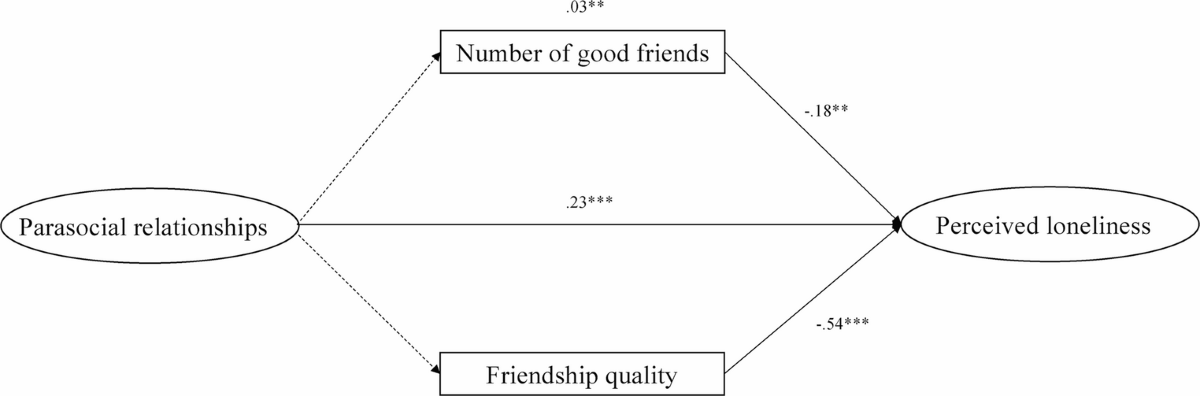
Porn scratches the itch of your sex drive while you sit inside on it all day, getting paler and weirder and worse at talking to women, which makes real sex harder to get, which makes the fake substitute more necessary. The substitute and the conditions that drove you to it form a closed loop that tightens over time. Same with parasocial friendship. The fake intimacy of streamers and podcasters scratches the loneliness while consuming the time you'd otherwise have used to maintain actual friendships, which makes you lonelier, which makes the parasocial substitute more necessary. Same with online status. The fake recognition of likes and followers scratches the status-itch while you neglect the real-world skills, jobs, communities where actual status comes from, which makes you lower-status in actual life, which makes the substitute more necessary.
Every substitute satisfaction the internet offers also destroys the conditions for the real version. The drug makes you a better customer for the drug.
This compounds in the political-economic dimension and that's where it gets grim. Look at r/ireland on any given day. Endless threads about how nothing is affordable, how everyone is stuck, how the country is broken, how nobody can buy anything. All true at the surface level. All also partially produced by the matrix the people complaining are inside. If you spend six hours a day on your phone you have less purchasing power than someone who spent that time learning a trade, building a side business, fixing things in their house, growing food, or just being awake enough at work to get promoted. The internet is an enormous tax on attention, time, and energy, which translates directly into a tax on income and accumulation. The phone in your hand is making you poorer, literally not metaphorically.
Then the matrix sells you back the resentment about being poor as content. The grievance economy thrives because the conditions it complains about are partly downstream of being in the grievance economy. r/ireland users who spent the same hours on their actual life would have more money, more skills, more local political power, and more sex. They'd also have less time to post about how nothing works. The matrix needs them stuck because stuck people are engaged people. Loser-causes are what the matrix sells to losers because losers click on them, and clicking on them is part of what keeps them losers.
Heroin makes you incapable of holding the kind of life that wouldn't need heroin. The internet makes you incapable of holding the kind of life that wouldn't need the internet. It's a near-perfect closed system.
For the people getting most worked up about housing, dating, politics, the cost of pints, the state of the country, half of what they're complaining about is real and half is a feedback loop they're inside. You can't tell which half is which from the inside. The only way to find out is to leave for long enough that the part of the complaints the matrix produced fades and you can see what's actually left. Which for most people would be a lot less than they currently believe.
There's another layer, and it's worse: the "discourse." Articles and threads explaining you to yourself. "The Unbearable Whiteness of Hammock Culture," "emotional labour," "weaponised incompetence," "girl dinner," whatever this week's coinage is. These present as helpful analysis rather than as entertainment. The new term feels like vocabulary for something you'd noticed but couldn't name.
The mechanism is the same. The term has to be engagement-optimised to spread. Which means: divisive (someone is the perpetrator), thymotic (it activates indignation, usually about being a previously-unnamed victim), socially deployable (you can use it as a weapon against people in your life), partially-true-but-overgeneralised (so people can argue about edges).
Genuine insight gets selected against. Real insight is subtle, hard to deploy as a weapon, doesn't divide cleanly, resists viral propagation. So what survives is concepts that feel insightful while functioning as social weaponry. The terms colonise your interior. You start interpreting your own life through them. Meanwhile the people who coined them have moved on to the next one.
"Emotional labour" is the cleanest example. Hochschild 1983, specific sociological observation about service workers required to perform emotions they don't feel. Concrete, narrow, important. By the time it spread it meant "any time I have to think about another person's feelings, particularly when I'm a woman doing it for a man." Deployable in any relationship to frame the partner as exploiter. The expansion makes it false but the people who absorbed it now experience their relationships through it and it reifies it, making it real. You notice "labour" you didn't notice before. You suddenly realise that your partner going through a hard time and leaning on you for basic human empathy is subtly toxic and potentially diminishing your email job career prospects. You dump him, cut your hair short and dye it an interesting colour. You die alone.
Unsatisfied with just destroying your ability to concentrate, regulate your emotions and create anything of value, this layer feeds on your inner life and your close relationships. The politics layer stays in a compartment. The discourse layer reaches into your marriage.
The matrix colonises real life in another way too. After enough time inside, you wander around the world pattern-matching every minor friction onto the civilisational doomer scenarios the discourse has installed in your head. The weird annoying homeless guy is a tent city in waiting. The rude lad in the coffee shop is the patriarchy and Andrew Tate. A taxi driver who smells and can't speak English is the great replacement and the total death of your culture. The pattern-matching isn't false exactly (they do exist at some scale) but it works like PTSD or OCD: what's actually in front of you gets blown up to a civilisational threat because the matrix has trained you to see specimens of categories rather than people in moments. Quixote read too many chivalric romances and ended up charging windmills he was certain were giants; the discourse is our chivalric romance, and it has turned every windmill into a giant. Real life starts to feel like a horror film with foreshadowing in every scene. You become weirder, more vigilant, less able to be at ease in normal places, less effective in basic interactions. More of a loser. More online. The matrix made real life feel actively hostile by training you to see threat-categories instead of people. So you retreat. So the loop tightens.
The matrix also foregrounds extremely niche lifestyles that are bad for almost everyone who tries them, gives them clicks because they're shocking, and pretends they're actually important. Trans, BDSM, breeding, chemsex, tradwives, Nazism, Aryan nation, incels, black separatists, blue-haired feminists, NoFap, whatever the next one is. You never come across any of these people in this form in real life. If you are around a lot of them, try not going to places that are specifically orientated towards weirdos. There's a lot of Catholics at mass and a lot of oddballs in the comic book store. Your favourite space or subculture has been colonised by these people? Try getting a better one.
When you do meet someone like this, which is rare, you can smell the internet off them. They are horrifically socialised. They usually have ASD or some other very obvious mental illness that is doing most of the work of their identity. They are not your enemy and they are not someone to think about that much. Your "take" on them, charitable or hostile, is meaningless because you're never going to meet them and they're never going to affect your life. Twenty years ago when you met one of these people you'd say "ehhhh, ok" and walk away. Now you think you're being brave by saying "hey man, that's actually not okay by the way, I just wanted to let you know," as if a small intervention from you on the bus is going to do anything except make the encounter weirder for everyone involved.
Look at a Trump-versus-antifa rally. Both groups, the one with the flags and the one with the masks, have so much more in common with each other than either of them has with you. They are all fundamentally strange, unfuckable, broken people who could not get a normal life to work and ended up routing all their unmet needs into a politicised subculture. They cosplay as enemies but they're the same kind of person. They go home from the rally and watch the same kind of content about each other. They both fully exist only when the matrix is amplifying them. The framing of "which side are you on" is the trap, because the answer is neither: "I'm on the side of not being either of those people, please." They need pity, not rage and attention.

And these are the people making the internet. Almost everything you read on Reddit or Twitter is posted by a tiny fraction of accounts, the sliver who post hundreds of times a day while the overwhelming majority never post at all. So the "public opinion" you anxiously track, the "discourse" you take the temperature of, is in large part the output of the exact people from that rally: the unwell, the unfuckable, the ones who poured a whole personality into posting. You're not reading the world. You're reading its loudest fraction of a percent, and the loudest fraction of a percent is almost by definition the least well. The phantom tribe doesn't just feel small. It is small: a few thousand sick people on a loop, dressed up as everyone.
The matrix needs these villains and freaks because villains and freaks generate engagement. So it manufactures a constant supply of them and trains you to think you have a stake in the fight. You do not. You have a stake in being able to walk down your own street without categorising every passerby into an imagined threat. Leave the fight between the freaks to the freaks. Handily, these kind of people have essentially no agency and are literally never going to be a threat to you and yours or impact your life in any way. They are not trying to follow your kid into a toilet, divorce rape you, give you HIV or whatever other bullshit the internet would have you believe. The man who is a threat to you is the same as it's always been, the huge cunt with face tattoos in a full tracksuit that's talking to himself.
The character you will actually meet in real life, forever, is the "free thinking renegade" who is able to "say what others are afraid to" etc. This boy has been on a quest to the darkest intellectual frontiers of the internet and he's been stockpiling. Saving it all up for years waiting for the fight he hopes he'll one day get to have. So when he finally meets someone he can pattern match to whatever insane category he imagines people to be, someone who looks enough like the mental representation he has of "the other side", the whole acidic mess comes out at once. Chunks of malformed statistics, misremembered quotes, and ideas taken from podcast episodes. In this bile you can just see the fragments of a Twitch stream where some unemployed freak with a webcam tells him how to think in between begging for money from his audience of slime cretins who simp for his attention as if he's the OnlyFans of telling them there are structural reasons for all of their life's failures. None of it fits the conversation he's actually in. You're not who any of it was meant for, not really. But the captured person can't see that, because he's been waiting so long to use the material that the actual human in front of him registers only as the long-awaited target. He's not talking to you. He's disgorging stored-up arguments at you as a stand in for the enemies the matrix gave him, you just got caught in the backsplash. And when you don't take the bait, don't "debate" him - which is literally the most bizarre posture imaginable, if you ever, ever use random social situations to "debate" people you need to throw away your laptop and phone immediately - don't engage on his terms, he gets more agitated, not less, because the dump didn't land where it was supposed to and he has nowhere to put it. He can now only have one kind of conversation, the kind where he finally gets to use everything he's been preparing, and again unless you have purposely gone to a place where people need to socialise "alongside an activity" because they can't do it properly, most actual conversations aren't that. So most actual conversations frustrate him. So he goes back online, where the right kind of fight is always available, and gorges himself on more enraging material.
The deepest layer of all this is harder to see because it operates on the part of you that does the seeing. Beyond the threat-categories and grievance-vocabulary, the matrix installs something deeper: an audience. And once the audience is installed, it runs constantly, even when nobody is there.
Anyone who has spent serious time on the internet has internalised a particular kind of imagined reader for everything they say and increasingly everything they think. This reader is democratic in the bad sense: a generic universal stranger with hostile dispositions, ready to misread, ready to take offence, ready to find your remark insufficiently inclusive of all the cases your remark didn't include. You've read enough comment sections, watched enough ratios, seen enough dunks, that this reader is now sitting at the back of your skull when you write a journal entry, when you talk to your wife, when you think about something on your own walk. They're not actually there. But the shape of them is there, and the shape determines what you can think.
McLuhan is again the prophet here. The medium is the message because the medium installs the kind of audience that makes you produce messages of a certain form. Twitter trains you to write tweets. Substack trains you to write Substack-ready essays. The aggregate of internet exposure trains you to write, and eventually think, for the universal democratic stranger. Even when you're alone. Even when you've quit Twitter. The substrate operates without the medium. The audience runs without an audience.
What this audience does to thought is specific and devastating. It enforces a particular kind of symmetry. Any observation about one group has to be wrappable in equivalent observations about your own; asymmetries need disclaimers, and judgements need a hedge that levels them back to universal applicability. The classic full-retard move is the universal-applicability objection. You say the housing crisis would be eased by people getting off their phones and learning a trade and someone replies "ever think about how not everyone can afford a bike to cycle to the trade school." The reply doesn't engage with whether the claim is true. It just establishes that the claim could not be addressed to absolutely everyone without disturbance, which in this audience is the same as refuting it. And since most precise observations are asymmetric (precision means excluding the cases that don't fit), this audience systematically coarsens what you can say. You stop being able to think thoughts that won't pre-formulate for the levelling reader. The thoughts trip on the imagined audience before they finish forming. Conversation goes the same way: every observation either party might make comes pre-sanded by the imagined hostile reader.
Aristocrats wrote better and made better art, and there's a structural reason for it. When Nietzsche or Schopenhauer or Montaigne wrote, their imagined reader was other educated men of their class, named correspondents, posterity, God. These readers had different things they'd push back on. They'd argue about logic, taste, evidence, style. They wouldn't reflexively police asymmetry itself. The aristocratic writer could say "most men are herd animals" and the imagined audience didn't reply with "well not everyone has had the educational opportunities to develop themselves." So the writer could think the thought through, see what it implied, see if it was true. The thought could finish.
What did it was the audience. They wrote for a small and known set of other educated readers, and that audience permitted thoughts a mass audience cannot permit. They could assume knowledge of the Western canon in a way that now we can only assume knowledge of "That spiderman meme" or "The gif where homer disappears into a bush." (and yes fair cop, The Matrix) They could be precise, make distinctions, pursue an asymmetric observation to its conclusion without having to wrap it for everyone in the world. The audience permitted the work, and the work was better because the audience permitted it. When you write for the herd, the herd's prior knowledge, assumptions and objection-patterns shape what you can say. You write for the herd and you get crabgrass, scrubland, the Steppe.
So much of what was thought through in earlier eras can no longer be thought at all. Kinds of thought were available to them that aren't available to us, because their audience was different. They could think "what is nobility?", "what should a man who has experienced real success do with his life?" as real questions with real content. We can't, because the questions pre-trigger the levelling objection before they can develop. They can be neither asked nor answered. The territory is just dark to us. The questions were never settled on the merits; the audience that could hold them disappeared, and that is why we can no longer see into it.
Mass media has installed the universal democratic reader into every brain that has been online too long, and that reader is unusually narrow. We're not at the end of history. We're in a particular intellectual moment, more constrained than most, and the constraint is invisible from inside it because the constraint is the part of you that decides what's invisible. You can't see your imagined audience any more than you can see your own retina. It's how seeing happens.
The deepest harm is therefore more specific than constantly spiked cortisol or hollowed-out pleasures. The matrix has territorialised the part of your mind that thinks, by installing an audience that polices what thoughts can complete. You're not just being entertained badly. You're being made much, much stupider. The kind of stupid that comes from never being able to follow an asymmetric observation through to its end.
Hirschman's framework: exit, voice, loyalty, clarifies why nothing else works.
Voice doesn't work. Voice on the internet is internal to the internet. It becomes more content, more discourse, more fuel for the machine. Every "the internet is bad" thread is itself an internet-culture artefact and gets processed by the same engagement machinery. The medium swallows criticism of the medium.
Loyalty is what most people are doing. Staying because they've invested too much, because everyone they know is there, because exit is socially costly, because they tell themselves they're using it for legitimate reasons and just need to be more disciplined.
Only exit works. But exit is hard for three reasons stacked. It's a drug (dopamine architecture, variable reinforcement, withdrawal). It's a culture (your jokes don't land with people who aren't online, your references don't parse, social dislocation). And it's a place (familiar, where you have a self, where you have a kind of belonging).
This is why even people who clearly understand the situation don't actually leave.
Real exit is the characters dissolving from your cognitive field.
The internet matrix is a closed referential system. Every piece of content refers to other content. The celebrity is trending because on a podcast he reacted to a viral TikTok and went viral, then streamers talk about it, then they talk about each other talking about it, then there are articles about the streamers, then podcasts react to the articles. Eating its own tail. Anxious rumination at civilisational scale. A cow chewing cud forever. Nobody is digesting anything because there's nothing to digest. The input is already previous output. The system exists to cycle, not to metabolise. Participants think they're informed because they're doing this. They're not. They're doing the cognitive equivalent of compulsive rumination. Mental chewing.
The characters this matrix populates are real only to the extent attention sustains them. Joe Rogan, Hasan Piker, whoever's trending. Eddies of attention, not people. They exist only because millions are maintaining them through ongoing attention. The whole matrix continues because attention continues. The moment attention stops, for the person who stopped, the relevant figures cease to be real.
This is Maya (illusion) in the precise Buddhist sense: appearance-without-substance, sustained by attention and craving, dissolving when those are withdrawn.
Quitting platforms is cosmetic. You can delete Twitter and still have all the characters, events, grievances, and frames running in your head. Still rehearsing what you would tweet. Still composing takes for an audience that's no longer there. Still caring about characters who aren't real.
Real exit is ontological. The characters dissolve from the cognitive field. The test is whether you could be in a room where people were discussing the matrix's latest drama and genuinely not know what they were talking about. Not pretending. Actually not knowing. "Did you see what he said about her podcast." "Who?" with honest incomprehension. Not the smug "who" of someone performing above-it-all. The real "who" of someone for whom those people have ceased to be ontologically available.
Quixote didn't get cured by reading better chivalric romances or reading the chivalric romances more critically or reading "both sides" (ffs). He got cured by not reading the books anymore and drifting back to reality. It's all or nothing. Even a little attention to slot-fillers keeps them real in your cognitive field. You can't have a little bit of Joe Rogan in your mental life any more than you can have a little bit of fentanyl.
Cal Newport et al, the digital-minimalism economy, is itself part of the matrix. Has to be. It survives by generating content within the attention economy about the attention economy. The solution-provider is materially dependent on the problem persisting. Newport probably believes his work is useful but he's structurally trapped. His prescriptions have to be deliverable as podcast episodes, books, newsletters, viral clips. The prescriptions that would actually work (stop listening to podcasts including this one, the New York Times is not news it is discourse-substrate, the people you think are significant are eddies of attention) cannot be delivered through his channels. His business model depends on the channels staying open.
So his actual advice is necessarily moderation-of-consumption advice, because that's the only advice his channel can carry.
General pattern: any critique of the attention economy delivered through the attention economy has a maximum depth, and the maximum depth is shallower than the problem. Critiques deeper than the maximum depth cannot survive transmission through the channels that exist. People who consume many of these critiques come away believing they've engaged with the full problem when they've only encountered the surface layer the channels can carry.
Test: a critique that instructs you to keep consuming content (including its own) is operating above the maximum depth. One that instructs you to stop consuming its category of content is operating at the maximum depth. A critique that makes you forget the category exists is operating below it, and almost certainly came from outside the attention economy.
The matrix won't fall away instantly, but given enough time away from the algorithmic internet, it will fall away. After three months you won't know the latest events, after six you won't know half the people. After a year it feels like watching AI generated children's YouTube content, which coincidentally, it is. Time-passing is most of the work. You can't force forgetting. Forcing is a form of attention. You can only stop feeding and let the characters fade at their own pace.
What replaces the matrix, if exit is successful, is attention to actual people, places, and events in your actual life. These have been backgrounded by the matrix's salience-grab. When the matrix dissolves they come forward again. Your wife, your kid, your friends, your neighbourhood, your body. The quality-of-life improvement is concrete, and it has nothing to do with feeling better about being off the internet. The people who were always actually there become vivid again. The feedback loop runs the other way. You spend the time on real things, the real things start to work, the substitutes get less necessary, you're less captured, you spend more time on real things, and so on. The drug-loop unwinds in reverse if you give it long enough.
I've lain awake at night, in a bed steeped in spilled vape juice and drying semen, furious at the choreographed argument between two arguably AI generated men on a podcast. Trying to find some ideology that would hide the fact from myself that this was seriously, seriously gay. I've been made anxious and weak by the torrent of hateful fear and nightmare fuel, again probably all fake, that I was served as news and content every day. I've had opinions about people I know changed by the ghosts I am fighting in my head. Coked up arguments about moderate rebels and fucking Yemen, things I know literally nothing about and have no stake in whatsoever. I was caught, for years. Years of my life wasted on a shared fictional universe without the slightest mapping onto reality. This is a fucking disease. You can cure it. My life has been much better after I did so. I don't want you to like and subscribe and share this article. I want you to stop. Not moderate. Stop.